Busbars
Aluminium C2C Busbar Layouts
Worked 16S1P and 8S2P examples
Choosing the right number and type of busbar saves a second order. Here are two layouts worked through.
Example 1: 16S1P (one long string)
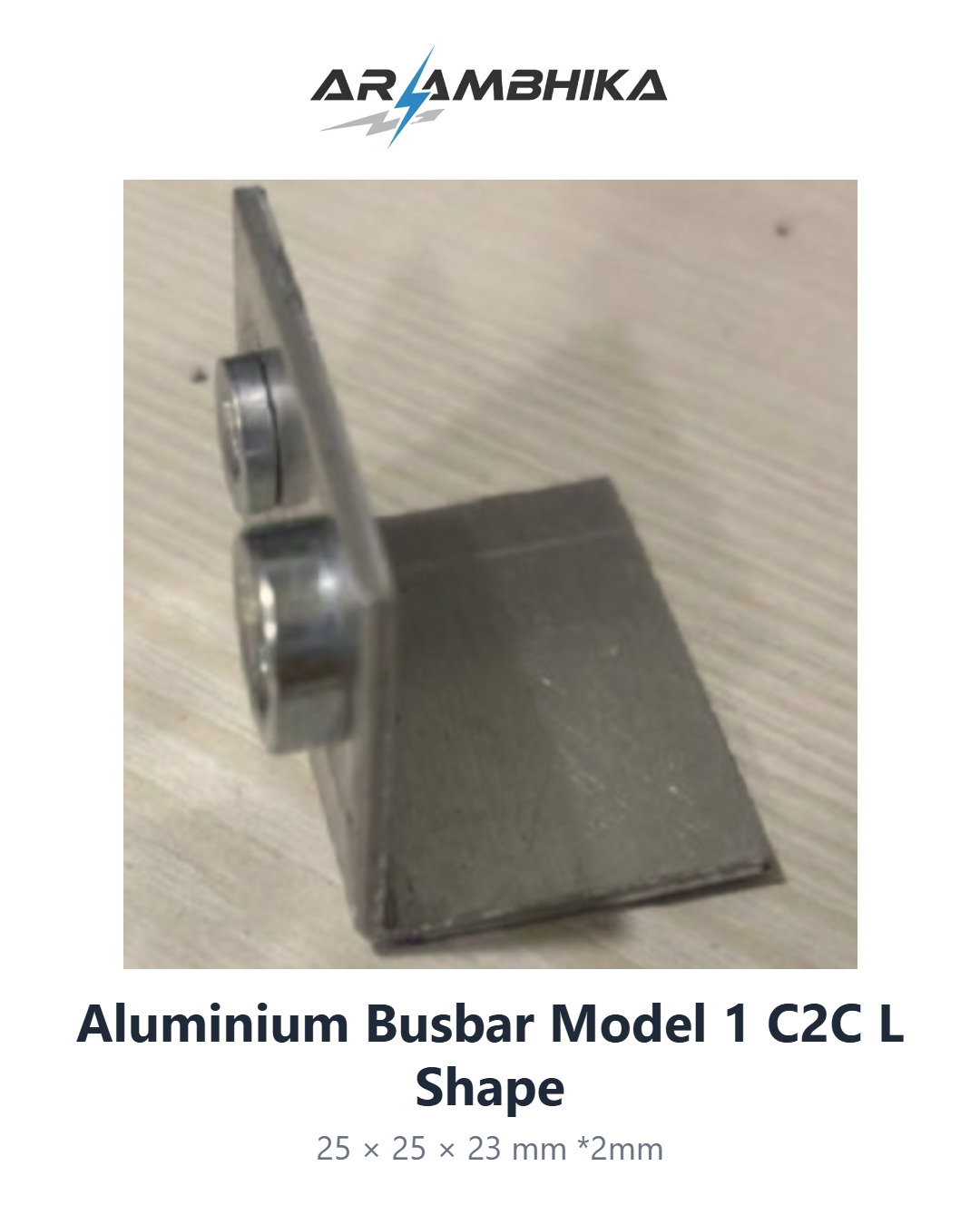
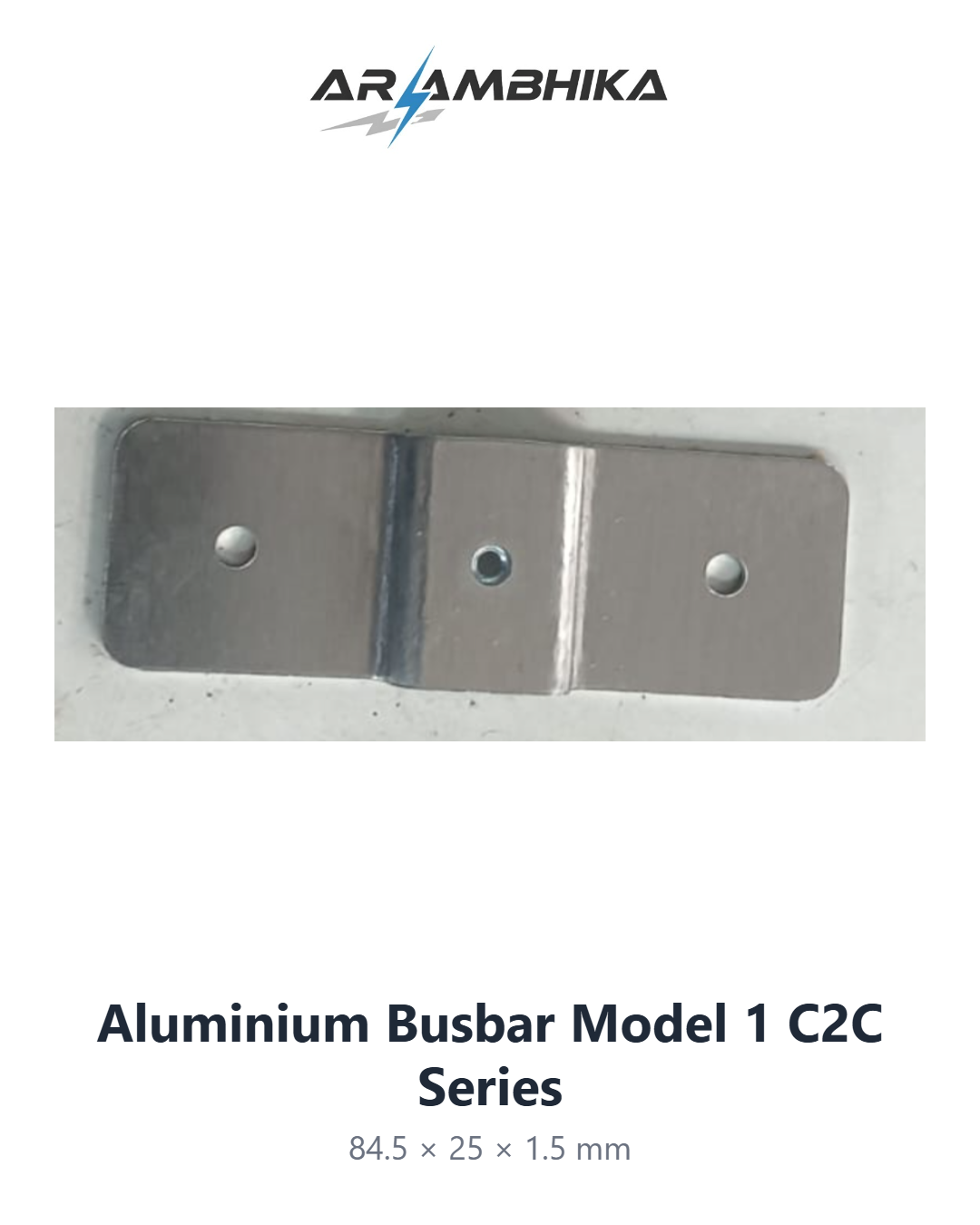
16 cells in series need 15 joints between cells, using C2C series bars. The pack ends are the first positive and last negative terminals, connected to the BMS and output cables. If the string is folded into rows, an L-shape bar turns the corner.
Example 2: 8S2P (two cells per group)
Pairs of cells connect in parallel: positive to positive, negative to negative, using C2C parallel bars. The 8 groups then link in series. Count: 8 parallel pairs (2 bars per pair, one per polarity) and 7 series joints between groups.
Parts counting
| Layout | Series bars | Parallel bars |
|---|---|---|
| 16S1P | 15 | 0 |
| 8S2P | 7 (or more, depending on how groups are tied) | 2 per group (16 total) |
Order a few spares and confirm bar fit against your terminal spacing.
Tips
- Sketch cell polarity first; one flipped cell breaks the string.
- Torque all bolts evenly; see the joint check guide.
- Plan cell compression; see the compression guide.
General guidance only. Check cell, BMS and strip datasheets and the standards that apply to your product before you build or sell a pack.
Products in this guide
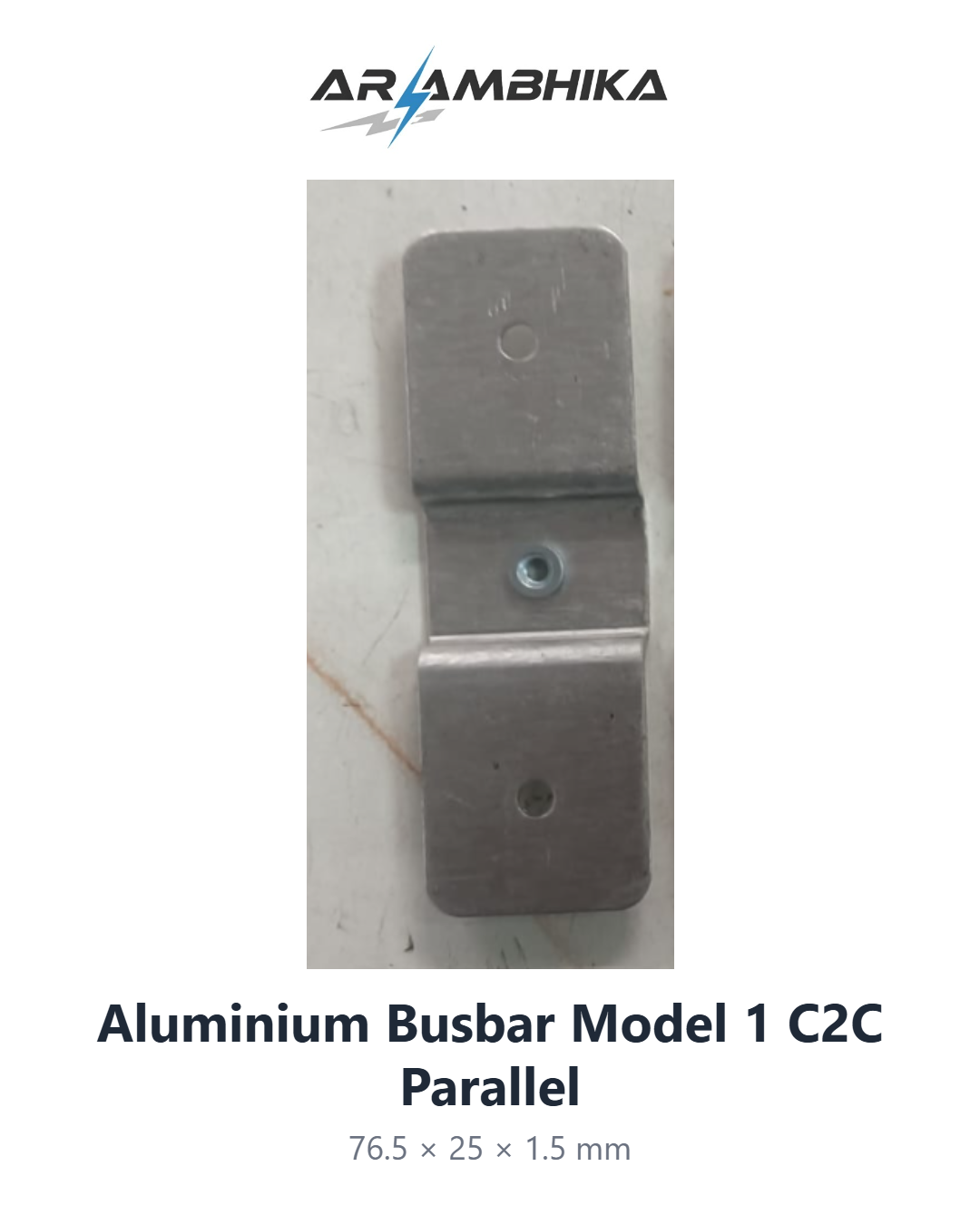
Model 1 C2C aluminium busbars
Live stock and price from our store. Tap a product to add it to your quote.
Loading products…
Frequently asked questions
How do I count bars for a bigger pack?
Series joints = groups - 1. Parallel bars depend on how many cells share a group.
Can I use one bar type for everything?
Not usually. Series, parallel and L-shape bars are shaped for different joints.
Do I need an extra bar for the output?
Output usually uses cables with lugs at the first and last terminals; confirm what your cell terminals accept.