Energy Storage
Active Balancing BMS for Home Solar
Why large LFP storage packs need it
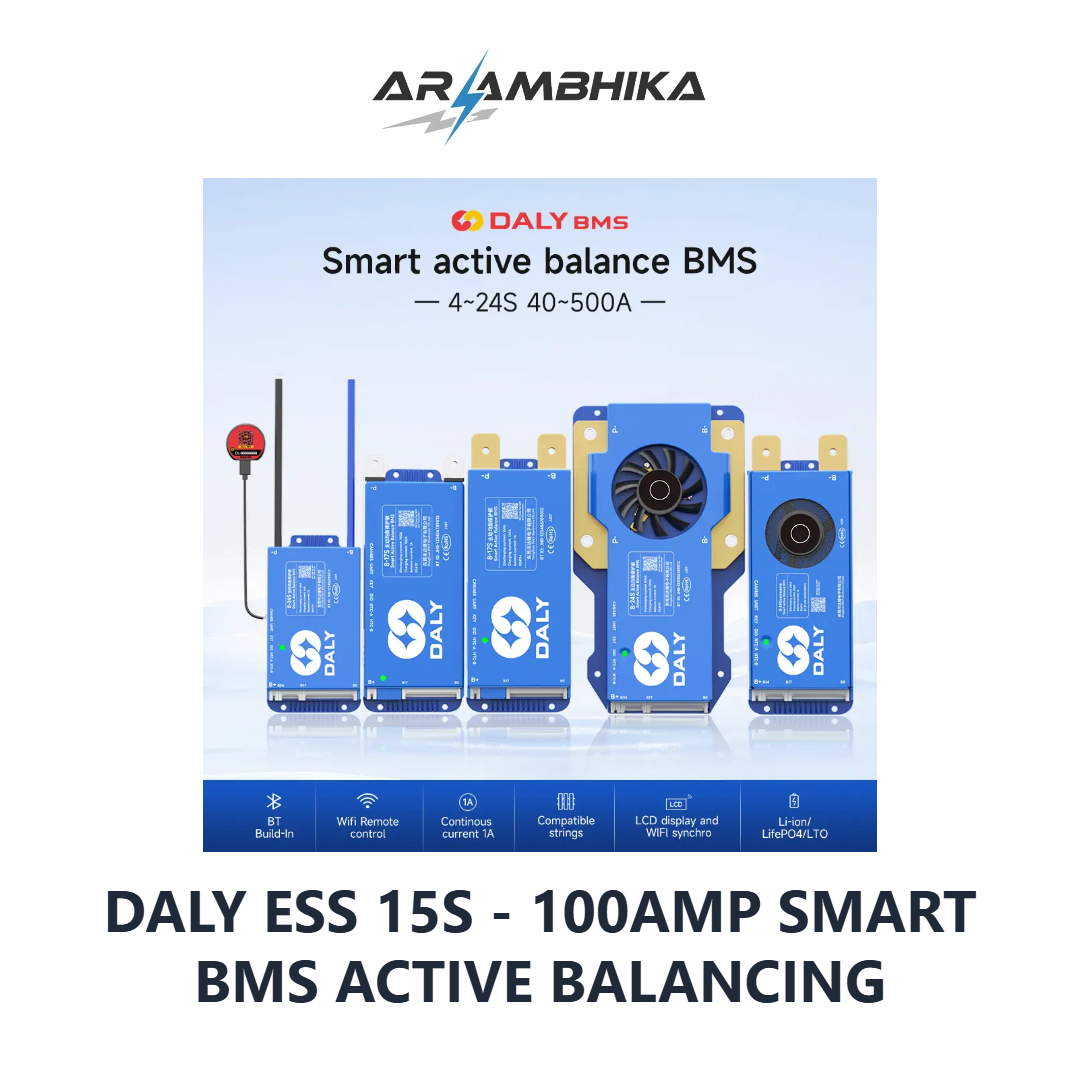
Large home storage batteries run for years and hold big cells, so tiny differences between cells add up. Active balancing moves charge between cells instead of burning it off as heat. Here is when it is worth paying for.
Passive vs active balancing
A passive balancer bleeds the highest cells through small resistors until the rest catch up. It is simple and cheap, but the energy is lost as heat and the balancing current is small. An active balancer transfers energy from stronger cells to weaker ones, so balancing is faster and wastes little.
Why large cells make this matter
On big prismatic cells such as 280 Ah and 314 Ah, a small voltage difference can mean a large amount of charge to move. A bleed-only balancer may take a long time to correct it, especially if the pack rarely reaches full charge. That is common in solar systems that cycle in the middle of the range.
The ESS range
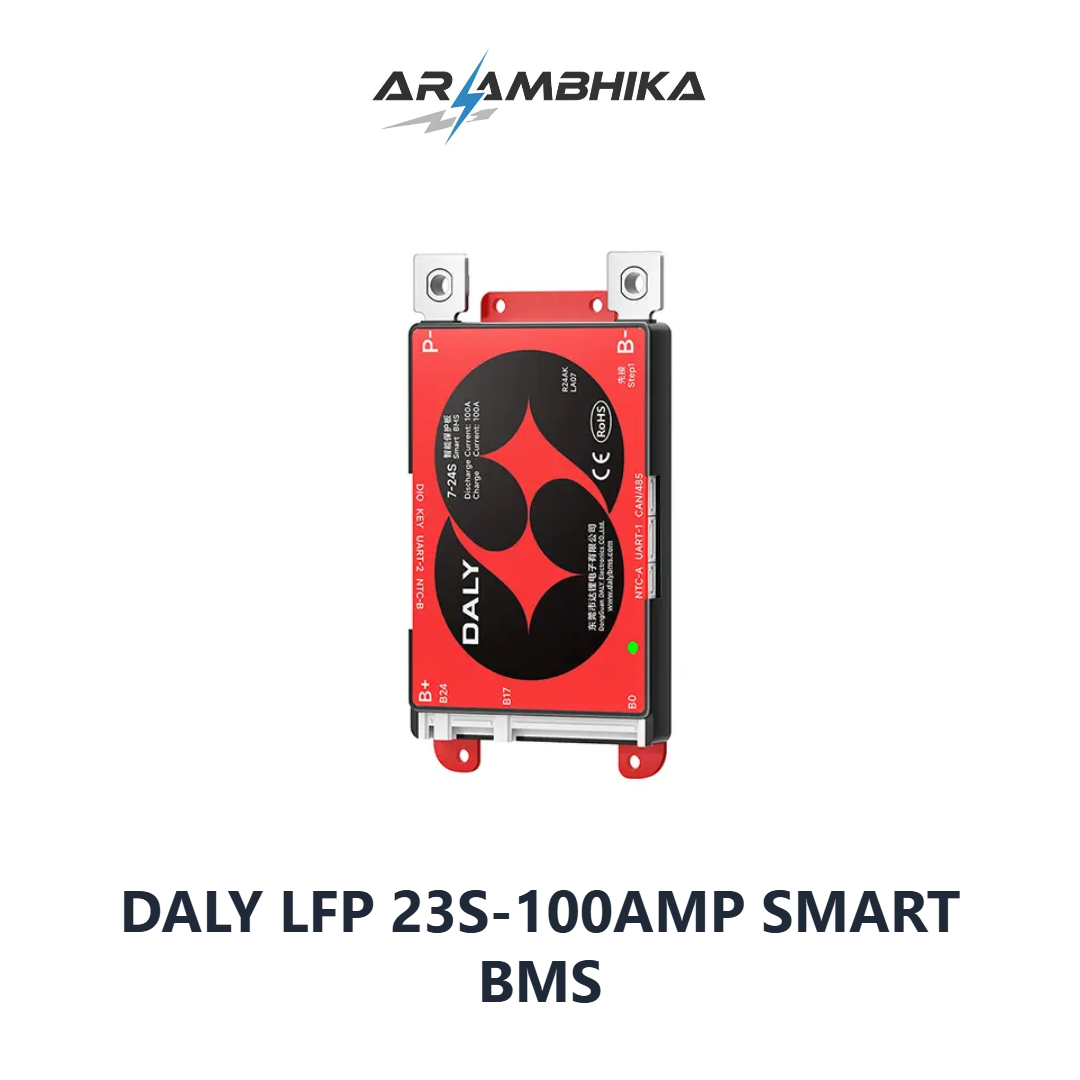
- Daly ESS 15S 100A smart BMS, active balancing for 48 V class storage
- Daly ESS 15S 150A smart BMS, active balancing when the inverter draws more current
- Daly ESS 16S 100A smart BMS (new model) for 51.2 V storage packs
Match it to the inverter
Check three things before you order: the series count matches your cells, the continuous current covers your inverter's peak draw, and the communication port suits your inverter. Pair the BMS with matched cells, for example the 314Ah 16S build, and bolted busbar.
General guidance only. Check cell, BMS and strip datasheets and the standards that apply to your product before you build or sell a pack.
Products in this guide
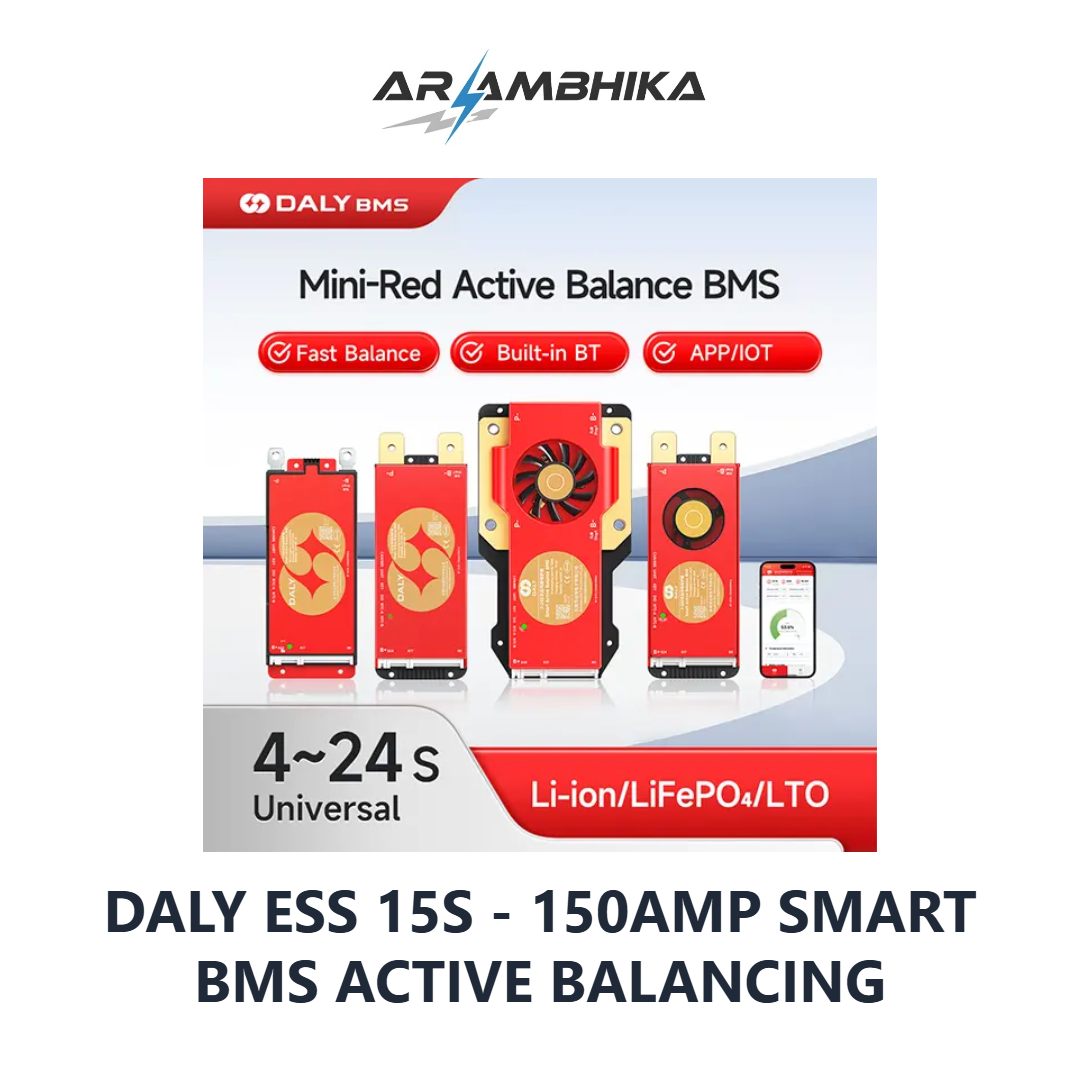
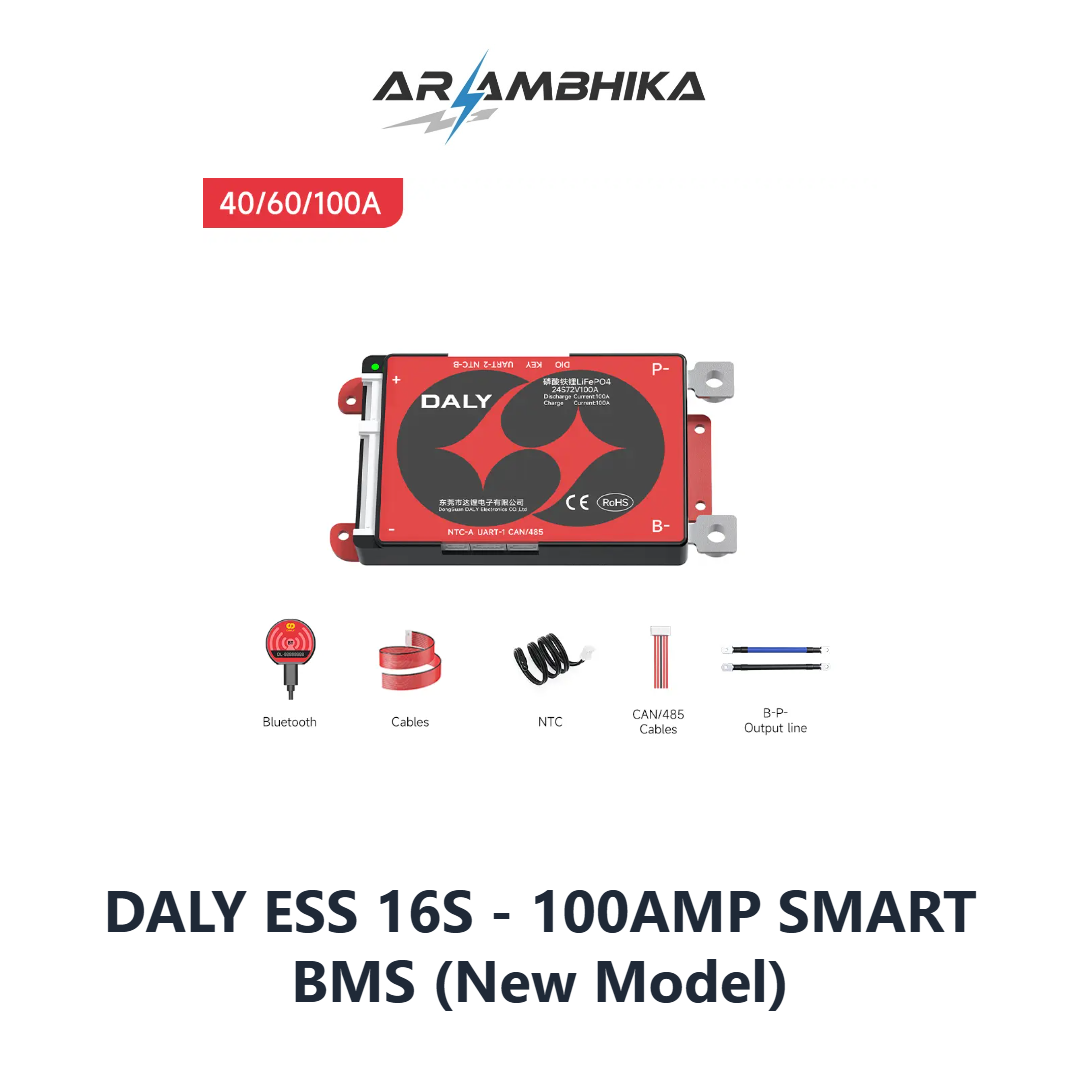
Daly ESS BMS with active balancing
Live stock and price from our store. Tap a product to add it to your quote.
Loading products…
Frequently asked questions
Do I need active balancing for a small battery?
Not usually. For small packs with few cells, normal balancing is often enough. Active balancing pays off on large cells and long-life storage.
Is 15S or 16S better for solar storage?
Both are used. 16S gives about 51.2 V and is widely used with 48 V class inverters. 15S gives about 48 V. Follow your inverter manufacturer's recommended range.
Will the BMS balance during discharge?
That depends on the model and its settings. Check the specification of the exact board you choose.