Busbars
Copper vs Aluminium Busbar
Current, weight, cost and corrosion compared
Both metals carry current well and both are used in packs. The better choice depends on how much current you draw, how much weight and cost matter, and how the joints are made.
Side by side
| Tin-coated copper | Aluminium | |
|---|---|---|
| Conductivity | Higher | Lower, so more cross-section is needed for the same current |
| Weight | Heavier | Lighter |
| Corrosion | Tin coating protects the surface | Oxide forms quickly, so joint prep matters |
| Joint with large cell terminals | Bolted and widely used | Bolted or laser welded depending on cell |
Our copper options
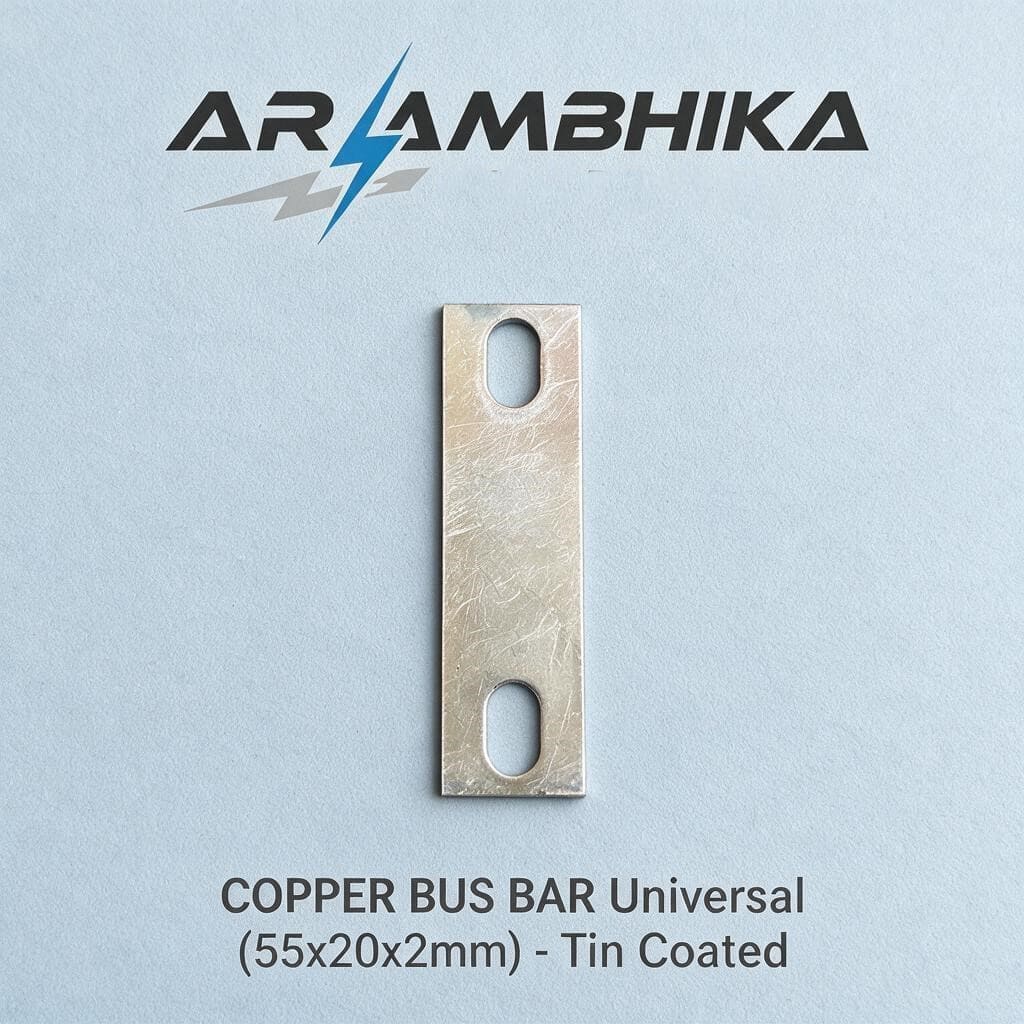
The universal tin-coated copper bars are 20 mm wide and 2 mm thick, in four lengths: 55 mm, 60 mm, 68 mm and 82 mm. Pick the length that spans your cell-to-cell distance.
Our aluminium options
The Model 1 C2C range covers series, parallel and L-shape links. See the aluminium busbar guide for details.
A simple rule
If current is high, packs are compact and long life matters most, copper is the safe default. If weight and cost lead and the current is moderate, aluminium of enough size can work. Always size the busbar for your continuous and peak current and confirm joint temperature in testing.
General guidance only. Check cell, BMS and strip datasheets and the standards that apply to your product before you build or sell a pack.
Products in this guide
 COPPER BUS BAR Universal (55x20x2mm) - Tin Coated
₹38 / Pcs
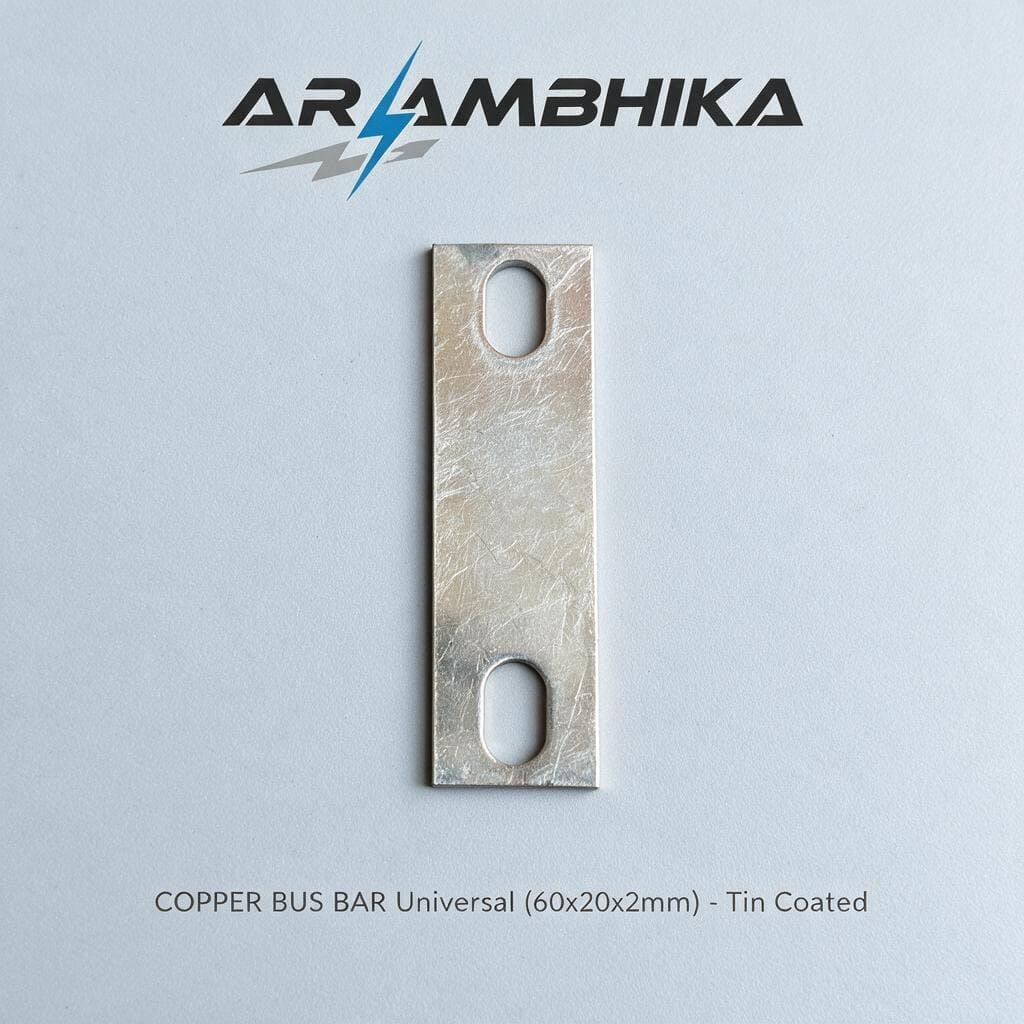 COPPER BUS BAR Universal (60x20x2mm) - Tin Coated
₹40 / Pcs
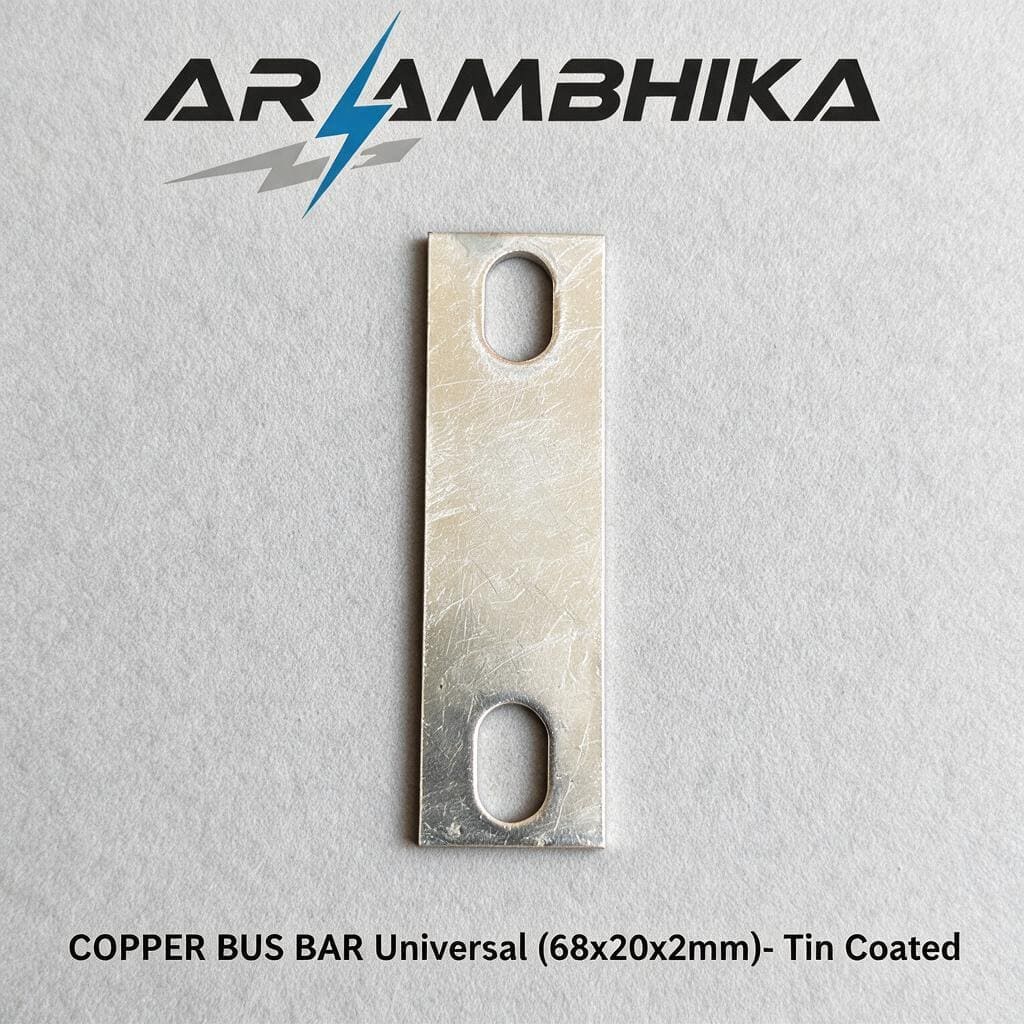 COPPER BUS BAR Universal (68x20x2mm)- Tin Coated
₹45 / Pcs
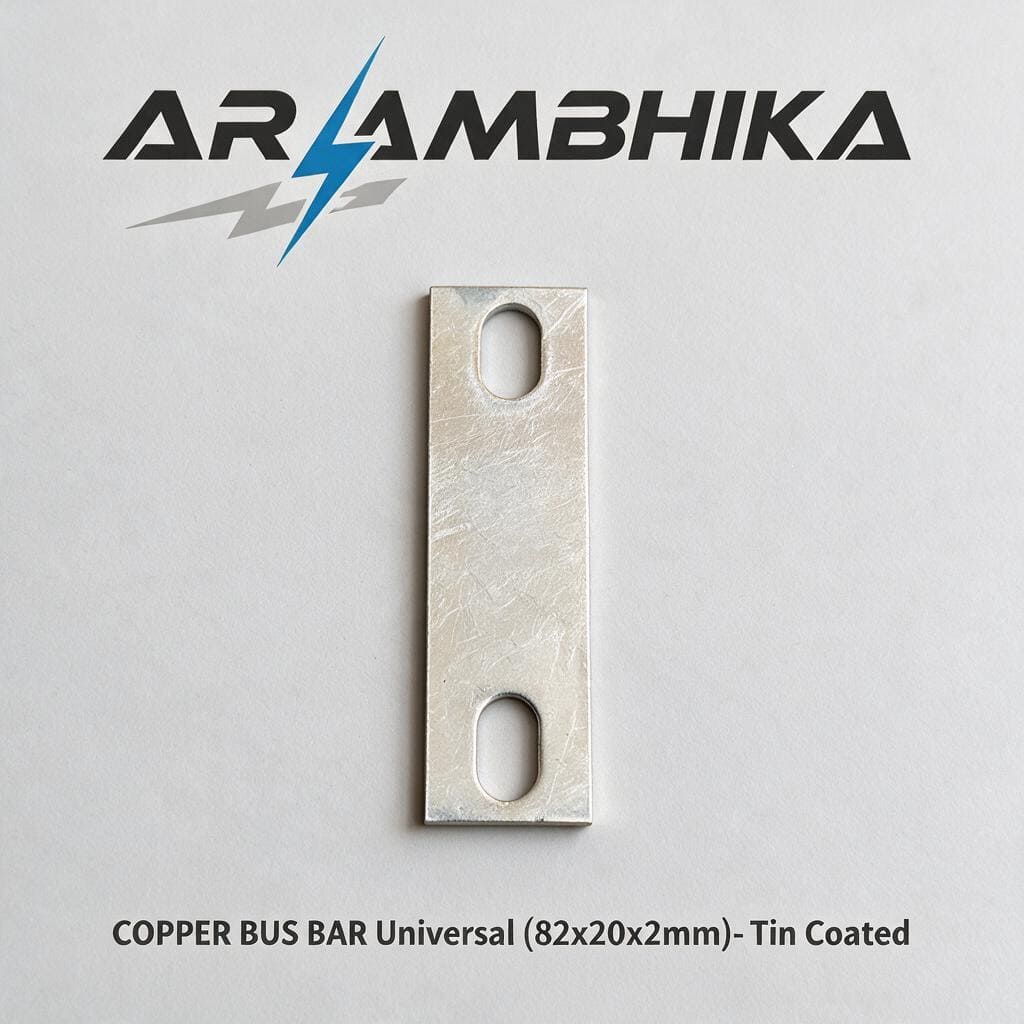 COPPER BUS BAR Universal (82x20x2mm)- Tin Coated
₹53 / Pcs
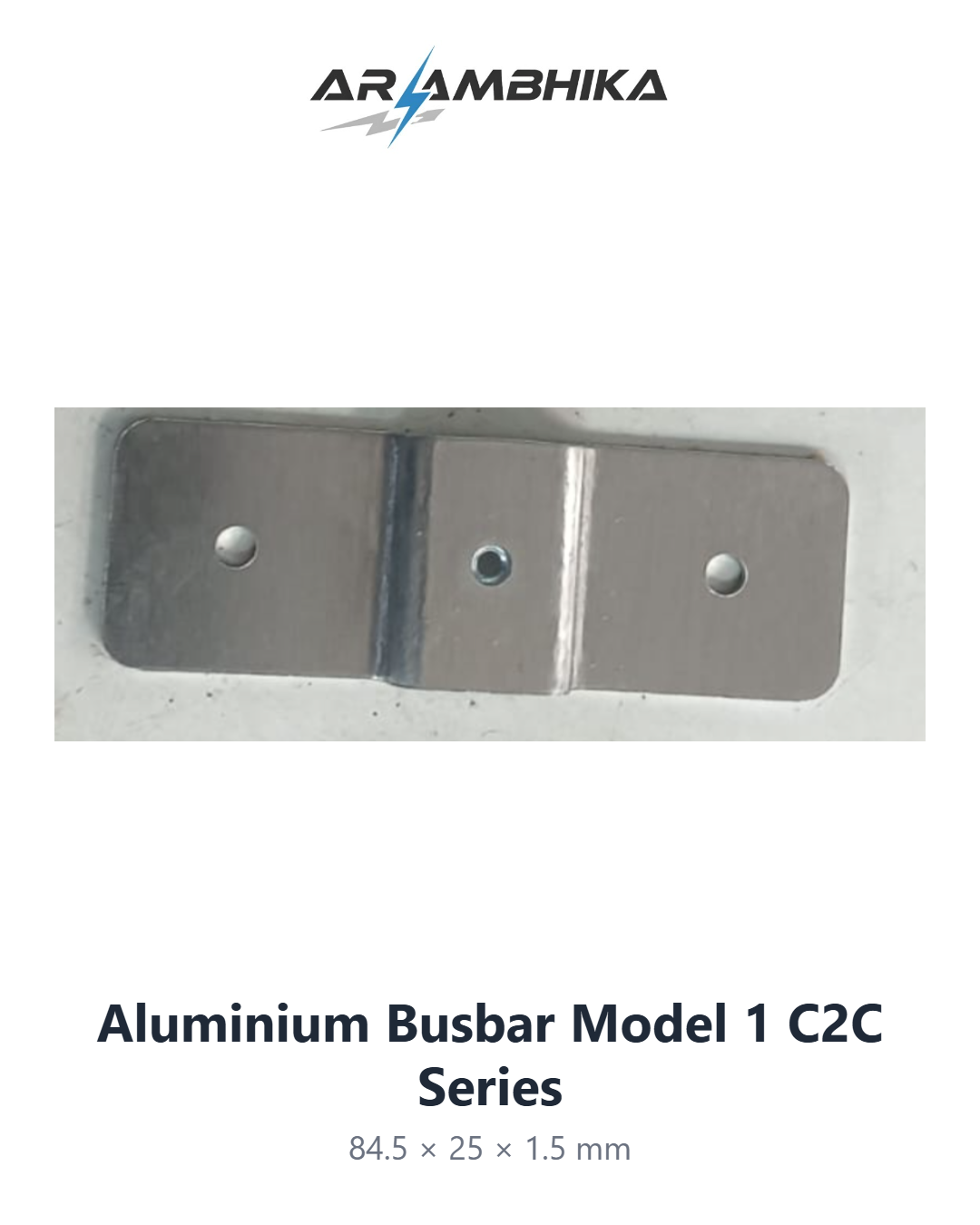 Aluminium Busbar Model 1 C2C Series
₹24 / Pcs
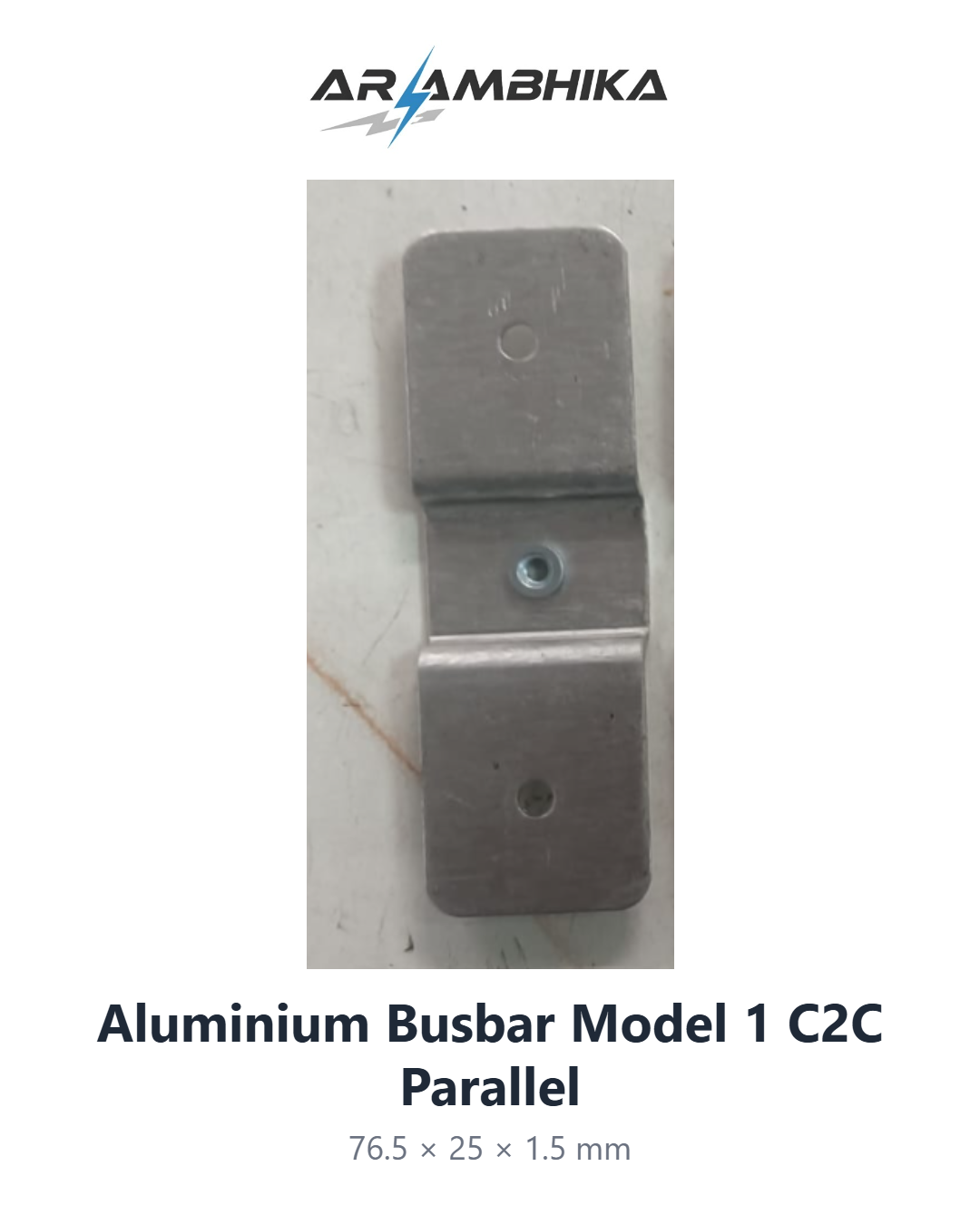 Aluminium Busbar Model 1 C2C Parallel
₹23 / Pcs
Copper and aluminium busbars
Live stock and price from our store. Tap a product to add it to your quote.
Loading products…
Frequently asked questions
Is copper busbar always better?
It carries more current for the same size and resists joint problems well, but it costs more and weighs more. The best choice depends on your design.
Why is copper tin coated?
The coating protects the copper from oxidising and gives a stable surface for bolted joints.
Can I mix copper and aluminium in one pack?
It is possible but dissimilar metals can corrode at the joint in damp air. Avoid direct contact unless the design handles it.